
Listening, sharing, and rediscovering Marillion’s classic – through my eyes
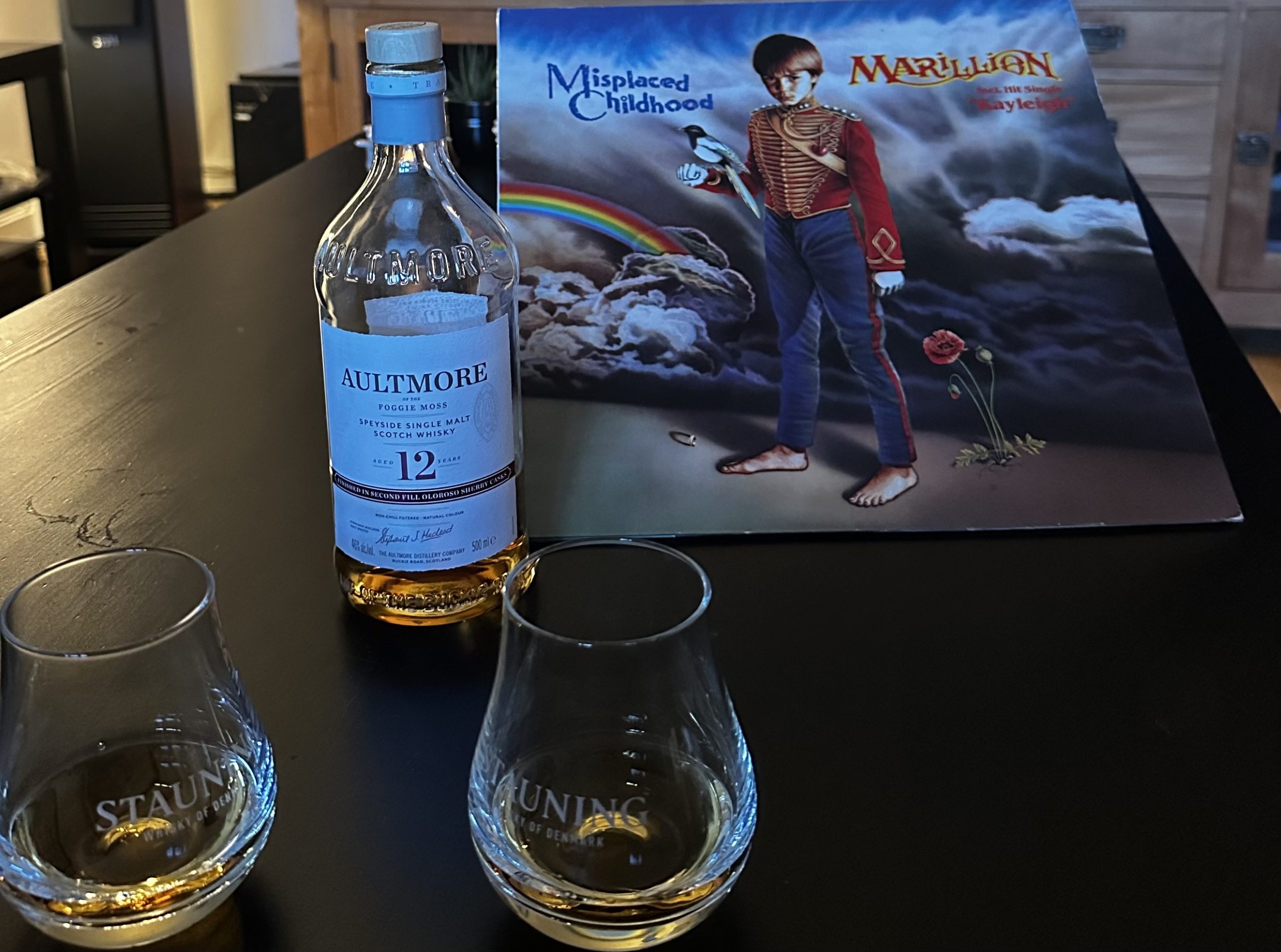
There’s something special about our album sessions. My husband Kenn and I do this regularly: one of us picks a record, gives an introduction, then we both listen in silence—just absorbing the music and letting the whisky (tonight, a glass of Aultmore 12 year) add its own warmth to the experience. No talking is allowed until the music ends; it’s a little ritual we both treasure.
Why I Chose Misplaced Childhood
This time, I chose Marillion’s third album, “Misplaced Childhood.” It came out in 1985—the year I was 14, and like everyone else, I first heard “Kayleigh” blasting from the radio, getting stuck on every mixtape, becoming a soundtrack to those teenage years. But what really sets this album apart is that it’s a concept album, with every track flowing seamlessly into the next. There’s no interruption, except for when you have to turn the record over. For me, that’s what makes it brilliant—it’s not just a bunch of songs, it’s one story. The theme running through it all is growing up.
I love the sound: the piano, the guitars, the drums—there’s a richness in how the band plays together. And then there’s Fish’s voice. I can hear the pain and frustration, the softness. His lyrics come from his own experiences, and you can feel that honesty. The band wrote the music, Fish (Derek W. Dick) wrote the words, and together it’s just magic for me.
How We Listen
We sat down with our whisky, the Aultmore 12 year (which is kind of our tradition—always a whisky, but a different one each time). I gave Kenn my introduction, told him why this album matters to me, and then we dropped the needle. After that, total silence. That’s our rule: no talking until the last note fades out. It’s not just background music; it’s the only thing we do. We don’t clean or multitask. We just listen, really listen. And I think that’s why it’s so powerful—it’s the best way to respect what the artist created.
What We Said – Our Thoughts and Reactions
When it was over, Kenn shared his impressions. He admitted he’d only known Marillion for “Kayleigh,” and never realized it was part of a bigger story. Hearing the song in the album’s context made sense for the first time—it became more than just “that hit.” He said, “I’ve got a whole new angle on Kayleigh now. It’s like with ‘Another Brick in the Wall’—when you hear the single, you’re just thrown into it. But on the album, it’s a part of a larger whole. Kayleigh was way cooler hearing it this way.”
We talked about how bands sometimes suffer from having a massive hit, and how Marillion always gets compared to “Kayleigh,” just like A-ha with “Take On Me.” Kenn said, “I don’t think it’s always an advantage for an artist to have a mega-hit like that.” He didn’t even realize Marillion was progressive rock at first. But after listening, he said, “Now I get it, it’s totally progressive rock. It has all the elements.”
I explained how the album only has two tracks on vinyl—side 1 and side 2—because all the songs flow together, just like on Pink Floyd’s “The Wall” or Porcupine Tree’s “Fear of a Blank Planet.” We love how, when we pick albums for each other, we end up listening to things we’d never choose ourselves. That’s part of the fun: swapping picks, giving introductions, and then sharing honest reviews afterwards.
The Ritual Matters
We also talked about how listening like this feels totally different from streaming. Kenn said, “You can’t get this experience from a streaming service. You can lay your phone down, connect it to your system, and hit play—but in 30 seconds, it’s over. With vinyl, you have to unwrap it, set it on the turntable, hear the crackle, the little scratches. That’s the real way to listen.” I completely agree. Even the act of flipping the record, seeing the cover art, taking a pause—that’s all part of it.
I told Kenn, “When you listen to an album this way, you hear it exactly as the artist intended. No messing with the equalizer, no cranking up the bass like we did back in the ‘80s. You just experience the music.” Kenn added, “Even listening to a bad album this way can be an experience. Because you actually paid attention and gave it a chance.” And that’s the biggest respect you can give a musician: focusing on what they’ve made, even if you don’t love it afterwards.
Why We Keep Coming Back
For us, these album sessions are about sharing, being present, and really listening. I always look at Kenn when he’s hearing an album I chose—watching his reactions, feeling his enthusiasm, even when he drums along or gets swept up in the music. Sometimes he gets a new perspective, sometimes he stays unconvinced, but it always makes for good conversation (and a better marriage, honestly).
If you ask me, everyone should try this. Pick an album, introduce it, listen in silence, and then review it together. Pour a glass of something you both like, and see what you discover—about the music, and about each other.
A Toast to Marillion
Forty years after its release, “Misplaced Childhood” still hits home for me. Listening with Kenn, sharing our thoughts, sipping a good whisky—that’s what makes an album session special. Here’s to many more nights like this, and to the artists who make it all possible.
